

Art has always commanded respect — but for most of its history it also commanded a certain seriousness. No laughing at the back. Then Pop Art arrived in the 1950s and changed the deal entirely. Consumerism, mass media, advertising, celebrity — all fair game. And right alongside those themes, humour found its way in too. Here's why comedy and pop art are a natural fit, and how to make it work.

Joker Painting by Barrie J Davies
Why pop art threw out the rulebook
For centuries, art was defined by sophistication — a set of unspoken rules about what was worthy of being called art and what wasn't. Pop Art was a direct response to that rigidity. It looked at the world around it — brands, billboards, celebrities, everyday objects — and said all of this is valid subject matter. With that shift came freedom, and with freedom came humour.

Smoking Big Cock Painting by Barrie J Davies
Pop Art is fundamentally about raw, human experience. And humour is about as human as it gets. Mixing humour with Pop Art isn't a gimmick — it's a natural extension of what the movement was always doing. Whether it's a parody of a famous brand, a comic-strip visual style, or a punchline hidden in the composition, comedy sharpens the message rather than undermining it.
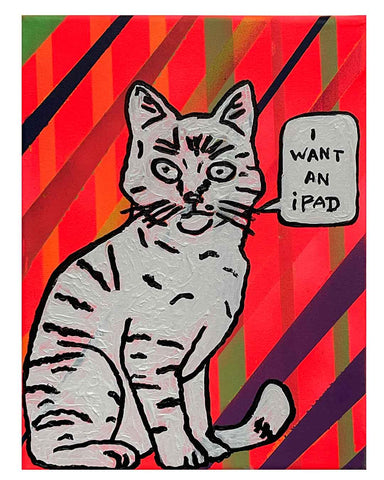
I Want Painting by Barrie J Davies
From the provocative works of Maurizio Cattelan to the deadpan wit of Banksy, humour runs through pop art at every level. It can be subtle or sledgehammer obvious. It can make you snort or make you think. The best funny art does both at once — lands the joke and leaves something behind. In a world that can feel relentlessly grim, a piece of art that makes you laugh is doing something genuinely useful.

Finger Painting by Barrie J Davies
Check out my range of funny cartoon paintings.
Watch: one of my funny paintings up close
To find out about my new artwork please join the mailing list.